Clearing out the physical clutter in your home instantly reduces your daily stress and saves you hours of cleaning each week. The fastest way to achieve that calm space is to tackle the exact items professional organizers always throw away first. Instead of agonizing over sentimental keepsakes or expensive furniture, you can make immediate progress by tossing the hidden junk that secretly drains your space. Expired goods, outdated paperwork, and broken gadgets take up valuable real estate in your cabinets and drawers. By ruthlessly discarding these ten specific categories of items, you create breathing room without making a single difficult emotional decision. Grab a heavy-duty trash bag, open your cabinets, and let the purge begin.

Expired Medications and Unused Prescriptions
Your medicine cabinet likely harbors a hidden collection of expired pain relievers, old antibiotics, and half-empty vitamin bottles. Professional organizers always clear out these items first because they pose a significant household hazard. Keeping expired medications clutters your bathroom shelves and creates a dangerous environment, especially if you have children or pets in the house. Over time, the chemical compounds in prescription pills and over-the-counter medicines begin to degrade. This degradation means the medication may no longer work as intended, or worse, it could become toxic to your body.
You must safely dispose of these medical supplies rather than simply throwing them in the bathroom trash can. The safest and most effective method is utilizing a local drug take-back program. If you cannot access a take-back location, the U.S. Food and Drug Administration (FDA) recommends mixing your unneeded medications with an unappealing substance like dirt, used coffee grounds, or cat litter. Place this mixture into a sealed plastic bag before throwing it in your household trash. Furthermore, you should never flush medications down the toilet unless they specifically appear on the FDA flush list, which designates certain dangerous drugs that must be flushed to prevent accidental ingestion.

Outdated Tax Records and Unnecessary Paperwork
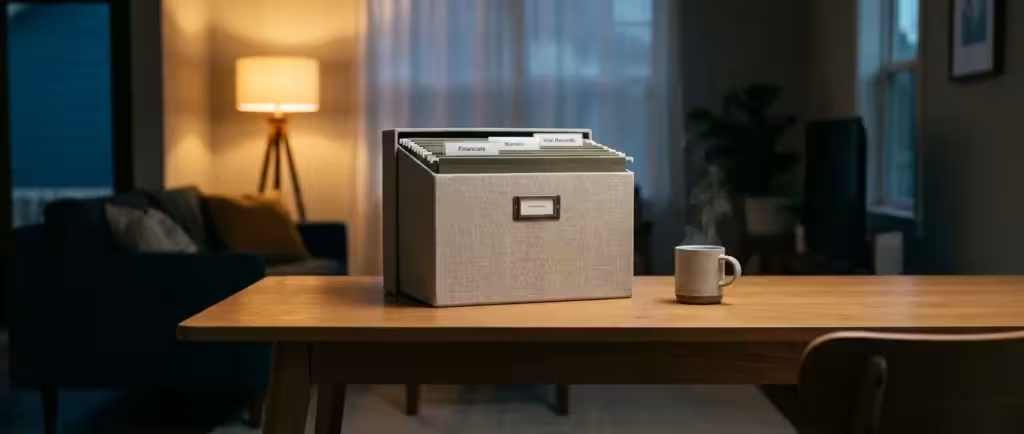
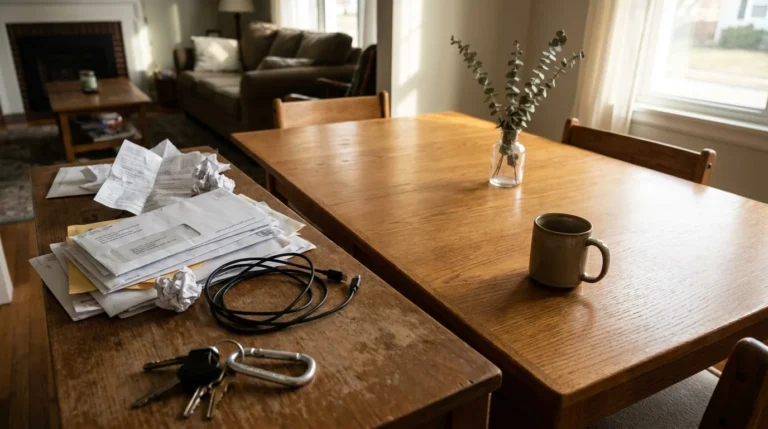
Paper clutter quietly takes over dining room tables, kitchen counters, and filing cabinets, creating immense visual stress in your home. Professional organizers target stacks of old receipts, utility bills, and expired tax documents early in the decluttering process because shedding this paper weight instantly makes your space feel lighter and more manageable. While you might worry about throwing away something important, the Internal Revenue Service (IRS) provides very clear guidelines on what you actually need to retain.
As a general rule, you should keep your tax returns and supporting documents for three years from the date you filed. The IRS only requires you to hold records for six years if you failed to report more than 25 percent of the gross income shown on your return, or seven years if you claim a loss from a bad debt deduction. Everything else simply takes up unnecessary space. Once you pass these specific timeframes, you can confidently run those documents through a shredder. To simplify your paper management, follow this straightforward document purging checklist:
- Shred immediately: ATM receipts, expired warranties, daily junk mail, and credit card offers.
- Shred after one year: Monthly bank statements, undisputed medical bills, and routine utility bills.
- Shred after three years: General tax returns, W-2 forms, and supporting tax receipts (unless you have a complex tax situation requiring a longer hold).
- Keep forever: Birth certificates, marriage licenses, social security cards, and property deeds.
Expired Makeup and Separated Skincare Products
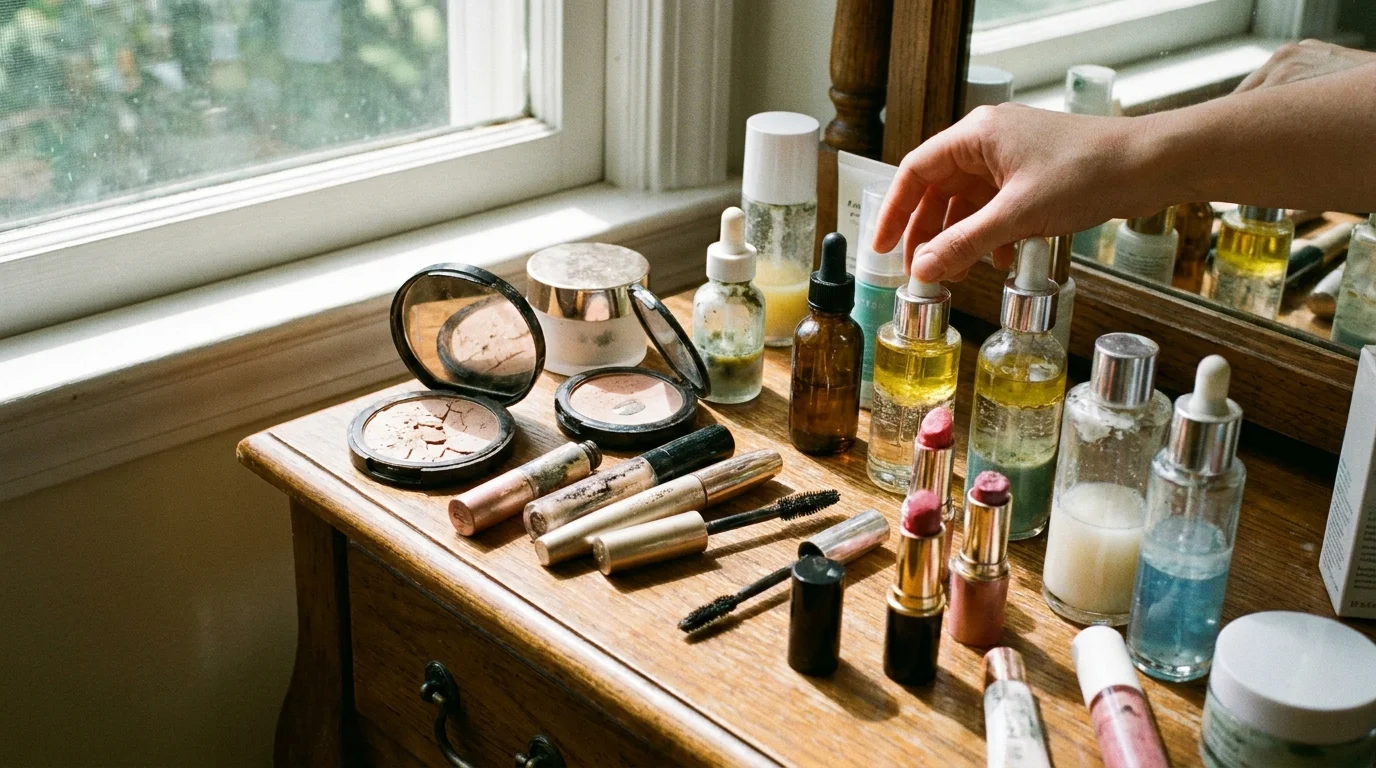
Bathroom drawers frequently become graveyards for expensive face creams, separated foundations, and dried-out mascaras. We hold onto these products out of guilt over the money we spent, but keeping expired cosmetics severely compromises your skin health and clutters your daily getting-ready routine. If your morning routine feels chaotic, your makeup bag is likely the culprit. Digging through dozens of expired lipsticks to find the one you actually want to wear wastes precious minutes every single day. Professional organizers ruthlessly purge old beauty products because applying them introduces harmful bacteria directly to your face.
Currently, the FDA does not legally require cosmetic manufacturers to print strict expiration dates on their packaging. However, manufacturers hold the responsibility for ensuring their products remain safe for consumer use. To help you manage your cosmetics, many brands feature a Period After Opening (PAO) symbol on the bottle—a small icon of an open jar displaying a number like “12M,” which indicates the product remains safe for twelve months after you open it. You must pay special attention to eye-area cosmetics. Industry experts strongly recommend throwing away your mascara just two to four months after purchase, as the wand suffers from repeated bacterial exposure that can cause serious eye infections. If your skincare products change color, develop a strange odor, or begin to separate, throw them in the trash immediately.
Broken Electronics and Mystery Cords
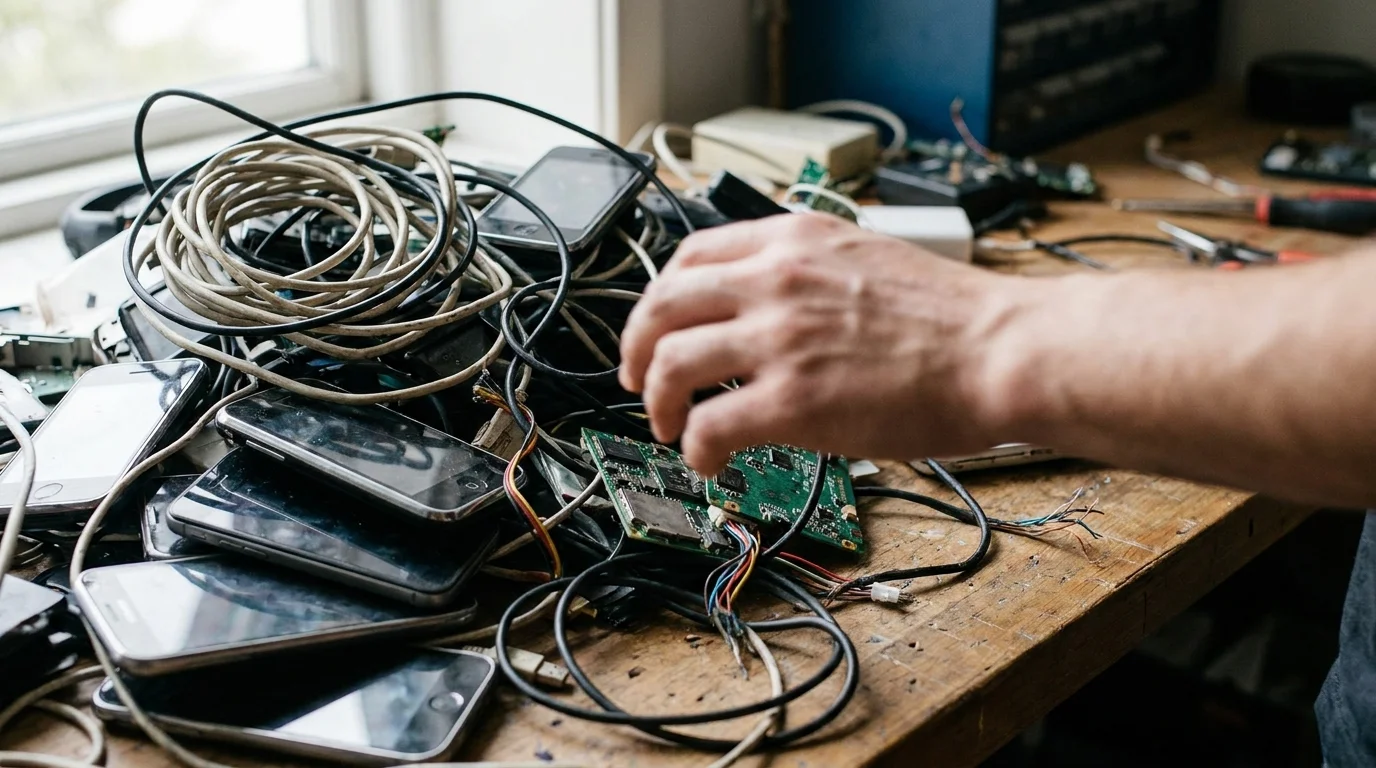
Almost every home features a designated “cord box” or a drawer stuffed with obsolete smartphones, tangled chargers, and broken remote controls. Professional organizers view this electronic clutter as a prime waste of storage space. You likely keep these items because you do not know how to properly dispose of them, but holding onto devices you haven’t used in five years only adds to your home’s visual noise.
You cannot simply toss old laptops and cell phones into your regular garbage bin. The Environmental Protection Agency (EPA) warns that electronic items often contain hazardous heavy metals like lead, mercury, and cadmium. When improperly discarded, these toxic substances can severely harm human health and leach into the environment. Instead, you should gather all your unwanted tech and drop it off at a certified electronics recycler. You can consult EPA recycling guidelines to find authorized drop-off locations in your community. While you organize your electronics, aggressively purge your mystery cables. If you cannot identify what device a cord belongs to within sixty seconds, throw it away or recycle it.
Wire Dry Cleaning Hangers
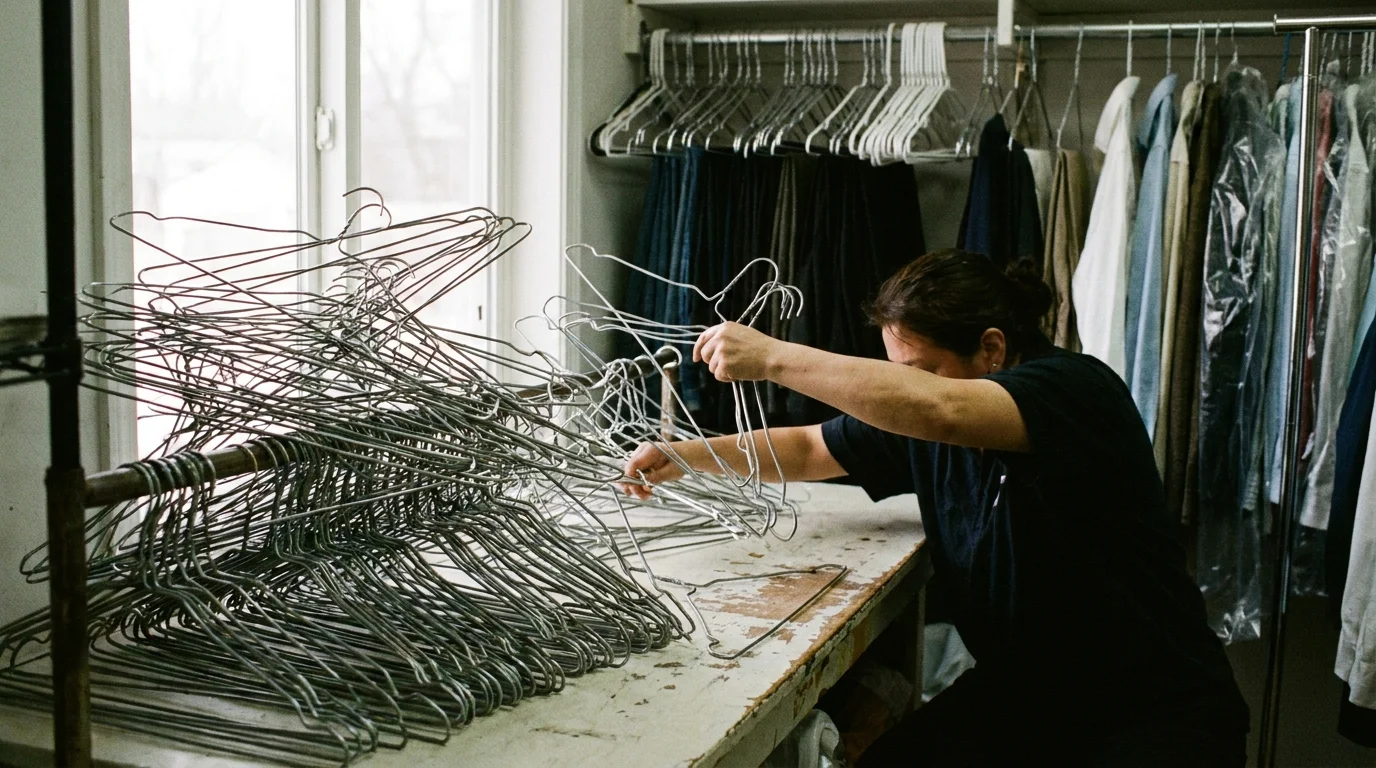
When you walk into a professionally organized closet, you immediately notice the uniform hangers. Organizers always throw away the flimsy wire hangers you receive from the dry cleaner. These thin pieces of metal create visual chaos, tangle effortlessly with one another, and actively ruin your expensive clothing.
Wire hangers lack the structural integrity necessary to properly support your garments. Over time, they stretch out the shoulders of your favorite sweaters, leave permanent creases in your dress pants, and can even rust, leaving unremovable stains on light-colored fabrics. Take thirty minutes to swap out your wire hangers for a matching set of velvet or sturdy wooden hangers. When your garments hang cleanly on velvet hangers, you can clearly see every shirt and jacket you own. You eliminate the dreaded shoulder bumps that wire hangers leave behind on delicate knits. Most dry cleaners gladly accept wire hanger donations to reuse them, allowing you to declutter your space while recycling responsibly.

Stale Spices and Expired Pantry Condiments
Professional organizers view an overcrowded pantry as a major barrier to efficient cooking. When you cannot see your ingredients, you end up buying duplicates and wasting money. Start your kitchen decluttering by pulling out every single jar, bottle, and spice container. You will almost certainly find ancient condiments hiding in the back corners and faded spices that lost their flavor years ago.
Spices do not necessarily spoil in a way that makes them dangerous, but they completely lose their culinary value over time. According to the United States Department of Agriculture (USDA), ground spices generally retain their quality for two to three years, while whole spices last three to four years. You can quickly test an old spice by crushing a small amount in your palm and smelling it; if you detect no aroma, throw it away immediately. Do not forget to check the expiration dates on salad dressings, marinades, and obscure sauces you bought for a single recipe.
| Pantry Item | Optimal Shelf Life | When to Throw It Away |
|---|---|---|
| Ground Spices (e.g., cinnamon, paprika) | 2 to 3 years | When the vibrant color fades or the smell disappears completely. |
| Whole Spices (e.g., peppercorns, cloves) | 3 to 4 years | When they no longer release essential oils upon crushing. |
| Opened Salad Dressings | 1 to 3 months (refrigerated) | When the oil separates stubbornly or the expiration date passes. |
| Baking Powder | 6 months | When it fails to bubble vigorously after mixing with hot water. |

Threadbare Towels and Mismatched Linens
Your linen closet should serve as a functional storage space for fresh bedding and bath supplies, yet it often becomes a dumping ground for frayed, stained, and stiff towels. Professional organizers never hesitate to throw away or repurpose linens that have outlived their usefulness. As towels age and endure countless wash cycles, their fibers break down, causing them to lose their soft texture and essential absorbency. Quality bath towels typically have a lifespan of two to three years of daily use before they require replacement. When a towel starts pushing water around your body instead of actively drying your skin, it has officially expired.
Pull everything out of your linen closet and evaluate your collection. You only need two to three quality bath towels per person in your household, plus a couple of extras for guests. Identify the towels sporting bleach stains, unravelling hems, or that permanent musty smell, and remove them from your bathroom rotation. You do not have to throw them directly into the trash; local animal shelters constantly need old blankets and towels to line cages and dry off rescue dogs. By donating your worn-out linens, you instantly create vast amounts of usable space in your closet while helping animals in need.

Free Promotional Items and Swag
Companies love handing out free tote bags, branded water bottles, and cheap coffee mugs at corporate events and conferences. While human psychology makes it difficult to throw away anything you receive for free, professional organizers recognize this promotional swag as pure clutter. We attach an irrational sense of value to these items purely because they cost us nothing. However, every item you allow into your home takes up physical space and mental bandwidth. A cluttered shelf full of mismatched water bottles constantly falls over and frustrates you when you try to unload the dishwasher.
You must give yourself permission to throw away items you never asked for in the first place. Gather all your canvas totes, plastic water bottles, and promotional koozies into one pile. Select your absolute favorite three tote bags for grocery shopping and your top two water bottles for daily hydration. Once you meet that limit, immediately place the rest in a donation box or the recycling bin. Reclaiming your kitchen cabinet space from unwanted promotional items drastically simplifies your morning routine, allowing you to easily find the dishes you actually use and love.
Manuals for Appliances You No Longer Own
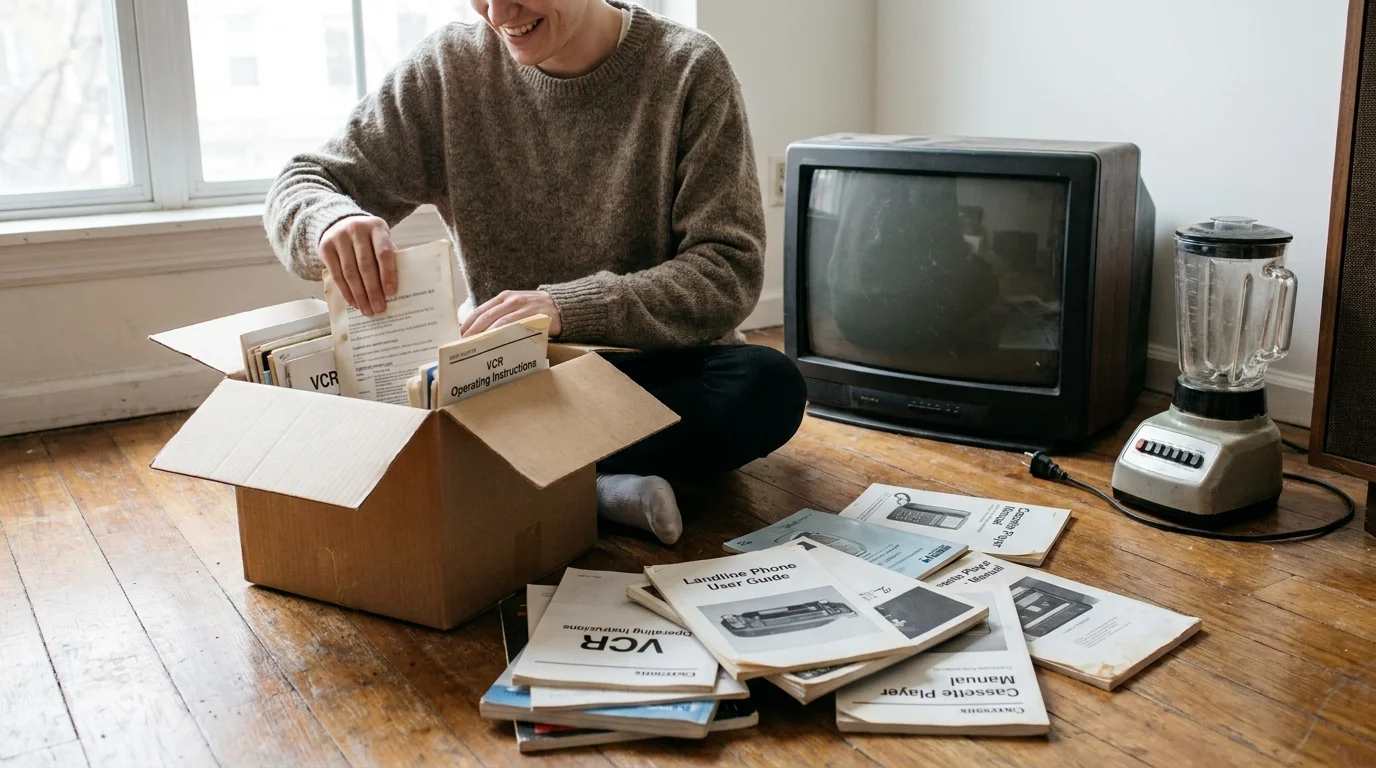
Filing cabinets and kitchen junk drawers frequently overflow with thick instruction manuals for blenders, televisions, and vacuum cleaners. In many cases, people hold onto these booklets long after the appliance itself has broken and left the house. Professional organizers always throw these bulky paper manuals straight into the recycling bin. Furthermore, the physical booklets often contain dozens of pages in various languages that you will never read. By eliminating these thick paper stacks, you can repurpose that prime real estate in your kitchen for items you use daily, like cooking utensils or specialty spices.
In our modern digital era, keeping physical instruction booklets is completely unnecessary. Manufacturers post nearly every appliance manual online in easily accessible PDF formats. If your dishwasher breaks or you need to reprogram your coffee maker, you can simply type the model number into a search engine and find the exact instructions in seconds. Go through your drawers today and ruthlessly recycle every manual you find. If you feel nervous about letting them go, create a digital folder on your computer and download the PDF versions for your current appliances. You will instantly free up valuable storage space without losing any necessary information.
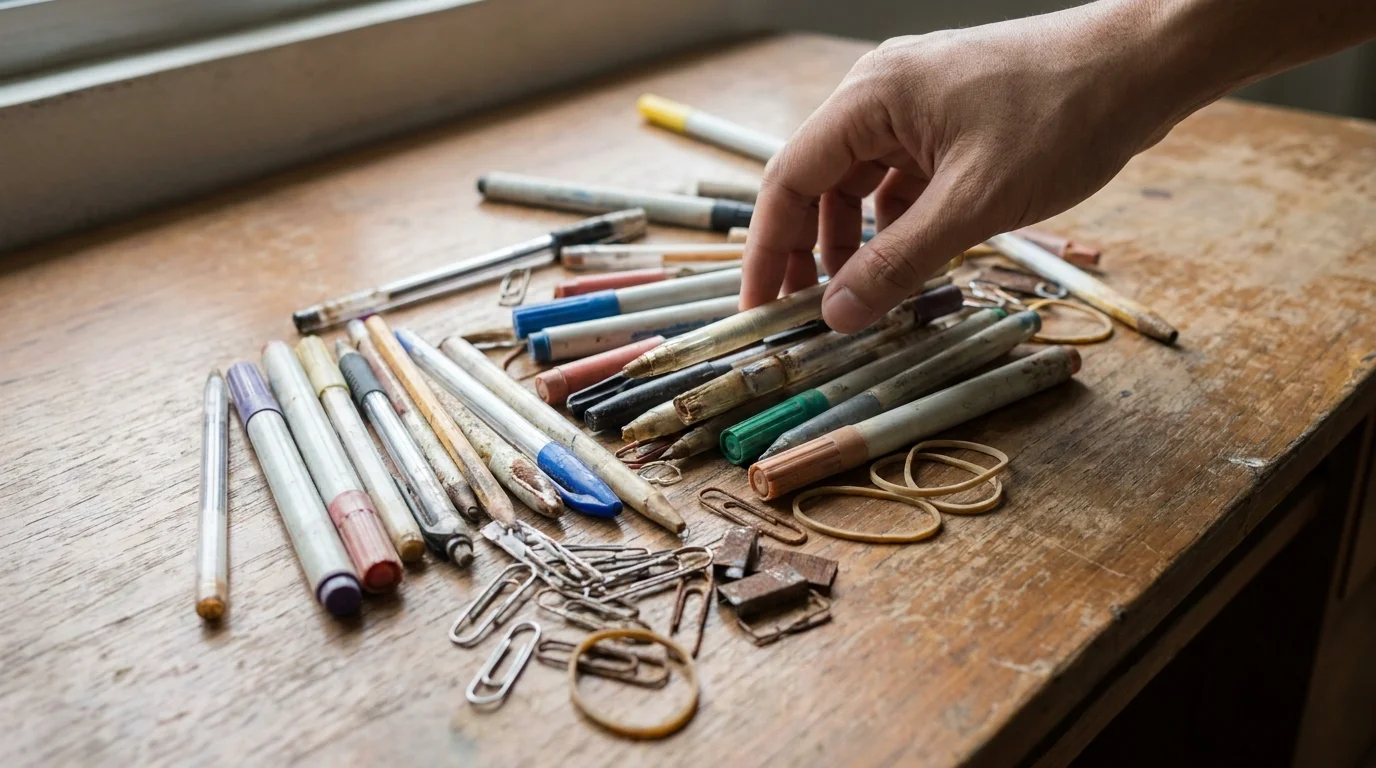
Dried-Out Pens, Markers, and Office Supplies
Nothing stalls your productivity quite like reaching for a pen to write down an important phone number, only to discover the ink has completely dried out. Desk drawers easily accumulate dozens of dead pens, capless markers, and broken rubber bands. We often toss a dead pen back into the cup out of sheer habit, setting ourselves up for the exact same frustration the very next day. Professional organizers tackle office clutter by immediately throwing away supplies that fail to perform their basic function. Organizing is not just about buying fancy bins; it is largely about removing the items that actively work against your daily goals.
You can execute this specific organizing task in less than ten minutes. Grab a blank piece of scratch paper and empty your entire pen cup or desk drawer onto your workspace. Test every single pen, highlighter, and marker. If a pen skips, requires you to scribble aggressively to get the ink flowing, or feels uncomfortable in your hand, throw it directly into the trash bag. Keep only the high-quality writing instruments that work perfectly on the first try. Streamlining your office supplies eliminates daily micro-frustrations and keeps your workspace looking sharp and professional.

Take Your Next Practical Step
Organizing your entire home feels like a monumental task, but you build incredible momentum by focusing on obvious trash first. By removing expired products, outdated papers, and broken items, you instantly create visible progress without draining your mental energy. Choose just one specific category from this list today—perhaps your overflowing pen cup or the bottom shelf of your medicine cabinet—and set a timer for ten minutes. Grab a trash bag and ruthlessly throw away the items that no longer serve you. Your future self will thank you for the extra breathing room and the peaceful, simplified home you create.